APSL801Pneumatic Fully Automatic Piston Pressure Gauge
Product Description
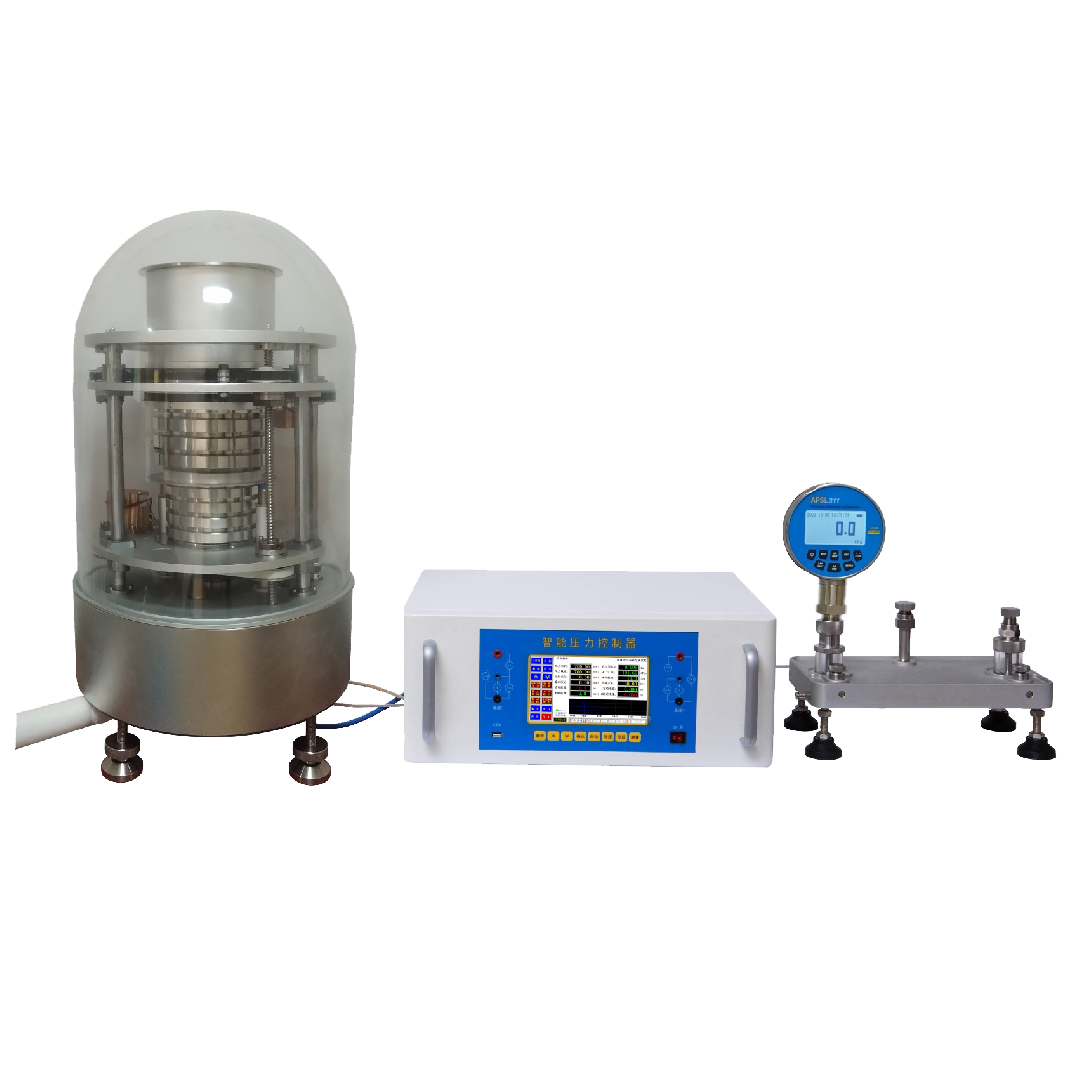
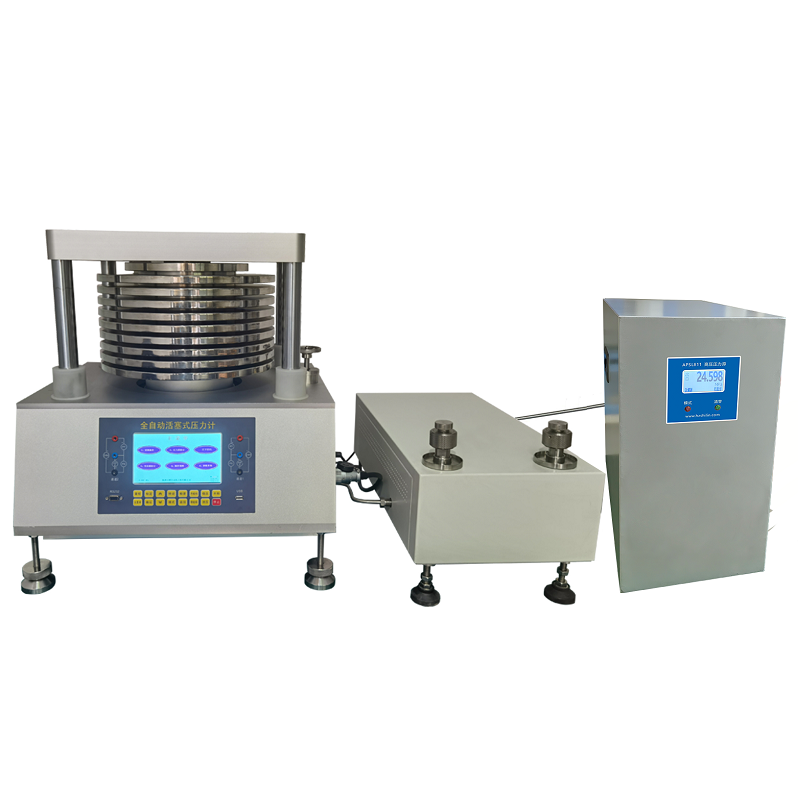
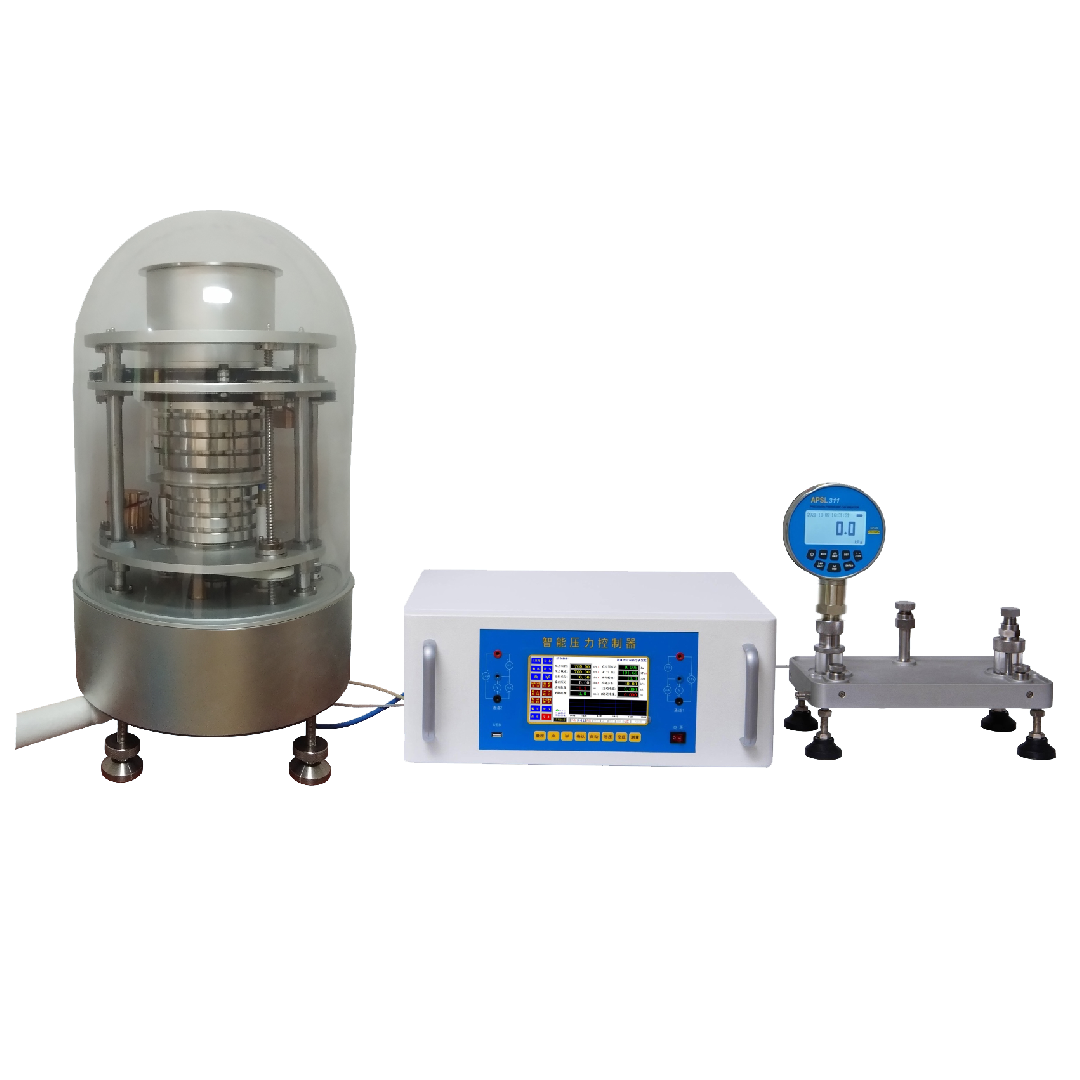
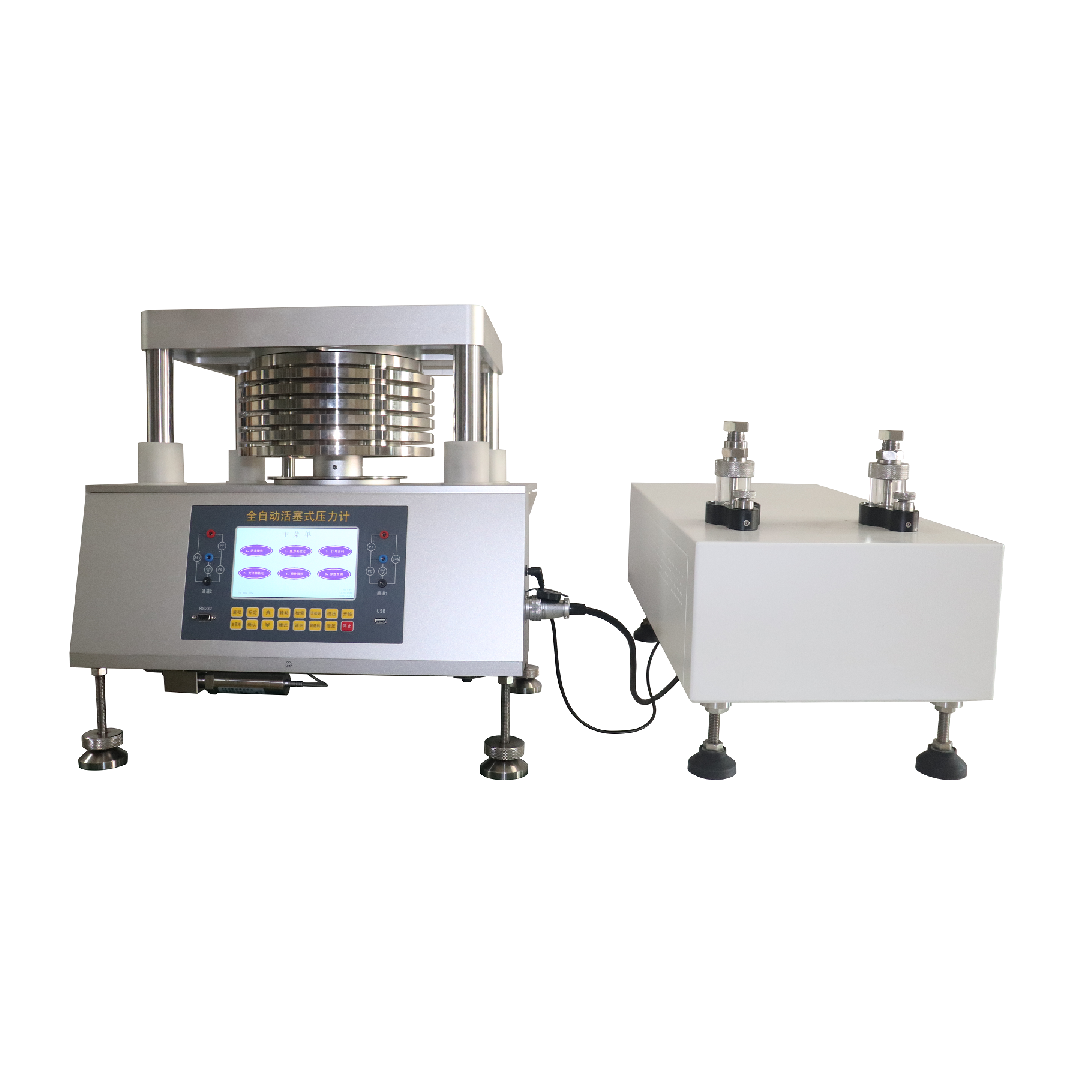
APSL801The pneumatic fully automatic piston pressure gauge is a product designed and developed by our company based on the invention patents "A Wear-Resistant Fully Automatic Piston Pressure Gauge (Patent No.:ZL201910276297.7)", "A Wear-Resistant Absolute Pressure Fully Automatic Piston Pressure Gauge (Patent No.:ZL202122144084.4)", and "A Positive and Negative Pressure Fully Automatic Piston Pressure Gauge and Its Usage Method (Patent No.:202210010954.5)". It consists of a fully automatic piston pressure gauge main unit and a pressure controller.
It can achieve fully automatic loading of weights and fully automatic pressurization. During the verification process, wear resistance can be ensured at all times, specification complianceing that the maximum error of the piston system within one verification cycle does not exceed the allowable error.
The system includes the functions of a fully automatic pressure calibration bench, with capabilities such as sending24V power, measuring real-time pressure, input current, input voltage, piston position, weight rotation speed, piston head temperature, humidity, etc. It can fully automatically verify pressure transmitters, digital pressure gauges, precision pressure gauges, etc.
, and automatically set the number of verification points. The verification speed is fast; verifying two pressure transmitters takes only about 8 minutes.
Product Details
1. Product Overview
APSL801The pneumatic fully automatic piston pressure gauge is based on our invention patent "An Anti-Wear Fully Automatic Piston Pressure Gauge (Patent No.:ZL201910276297.7)》、"An Anti-Wear Absolute Pressure Fully Automatic Piston Pressure Gauge (Patent No.:ZL202122144084.4)》andA positive and negative pressure fully automatic piston pressure gauge and its use method (patent number: 202210010954.5)》Product designed and developed,Composed of a fully automatic piston pressure gauge main unit and a pressure controller. It can achieveFully automatic weight loading,At the same timefully automatic pressurization. During the verification process, at any time it canprevent wear and tear, ensuring that the maximum error of the piston system within one verification cycle does not exceed the allowable error. The system includes the functions of a fully automatic pressure calibration bench, and hassend24V Power supply, measures real-time pressure, input current, input voltage, piston position, weight rotation speed, piston head temperature, humidity and other functions.Can fully automatically calibratepressure transmitters, digital pressure gauges, precision pressure gauges, etc., automatically set the number of calibration points. Fast calibration speed, calibrating two pressure transmitters takes only about 8 minutes.
As shown in the figure below, the set value can be operated by the 'Set Value Increase' and 'Set Value Decrease' buttons in step mode according to the control step, or directly by the input window on the touch screen. The control step can be modified arbitrarily. After the piston is lifted, the descent speed is automatically calculated. When controlling pressure, the weight rotates automatically, and stops automatically when stopped. Automatically measures 2-4 channels of current, and can calibrate 2-4 transmitters simultaneously.
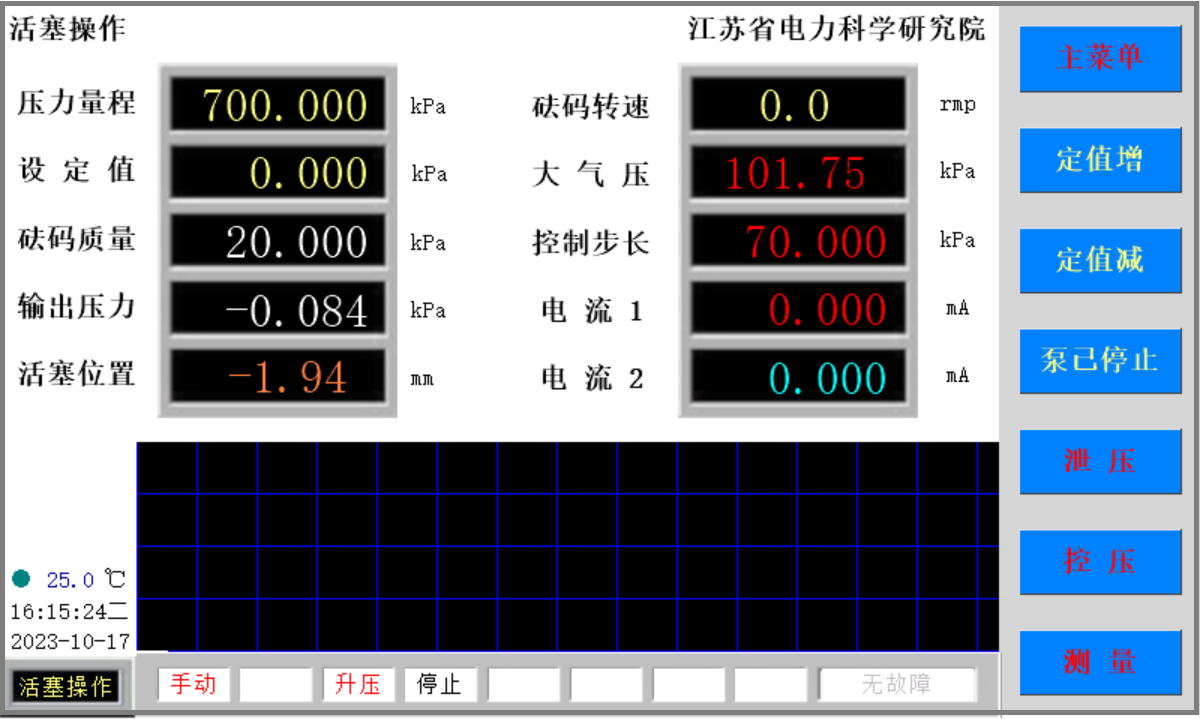
Pneumatic fully automatic piston pressure gauge can be divided into: positive pressure fully automatic piston pressure gauge, positive and negative pressure fully automatic piston pressure gauge, absolute pressure fully automatic piston pressure gauge, zero-start micro pressure fully automatic piston pressure gauge.
2. Functions
Fully automatic calibration of pressure transmitters, automatic recording of calibration results, automatic printing of calibration reports;
Fully automatic calibration of precision digital pressure gauges, automatic recording of calibration results, automatic printing of calibration reports;
Fully automatic verification of precision pressure gauges, automatic calculation of errors, automatic recording of verification results, and automatic printing of verification reports.
3. Features
Has video playback function, can watch all operation videos.
Can be remotely controlled via serial port or WIFI, enabling unattended operation.
Standard configuration gas-liquid separator.
4. Related patents
201720241593.X
201920462275.5
201820858929.1
201910276297.7
5. Technical indicators
5.1 Positive pressure measurement range and resolution:
(2-160)kPa,2kPa;
(5-250)kPa,2.5kPa;
(10-400)kPa,5kPa;
(10-600)kPa,5kPa;
(20-700)kPa,10kPa;
(20-1000)kPa,10kPa;
(20-1600)kPa,10kPa;
(50-2500)kPa,25kPa;
(100-4000)kPa,50kPa;
(100-6000)kPa,50kPa;
(100-7000)kPa,50kPa;
(200-10000)kPa,50kPa;
5.2, Accuracy:
Pressure: 0.005 class, 0.01 class, 0.02 class, 0.05 class.
Current:(0~22)mA, 0.02 class.
Voltage:(0~5.5)V, 0.02 class.
Compensation correction:
Temperature correction.
Gravity acceleration correction: Use gravity acceleration to correct the mass of the weight.
5.3, Others:
24V Power output function, with 2-4 power measurement channels, convenient for calibrating pressure transmitters.
Standard configuration of 2-4 quick connectors for the device under test, can be equipped with multiple (3-4) expansion channels to calibrate multiple sensors.
Weight material: non-magnetic stainless steel.
Piston rod and piston cylinder material: tungsten carbide.
Pneumatic working medium: nitrogen.
Can be connected to TMMS-2000 software to automatically print verification reports.
6. Performance Features
Fully automatic weight loading.
All weights rotate synchronously, with no wear during the weight loading process.
Built-in dedicated pressure source, automatic pressurization.
Can measure and display parameters: pressure, input current, input voltage, temperature, piston position, rotation speed, etc.
Can measure and display piston position and rotation speed.
Complies withJJG1086-2013"Gas Piston Gauge",JJG99-2006National Metrological Verification Regulation for Weights.
Fully automatic weight adding/removing: weights not placed on the hanging basket rotate synchronously with those on the basket, loading weights at synchronous speed, no wear during loading, good stability, fast pressurization.
Adopts a wear-free anti-break piston system, using rolling at limit positions, piston disc without wear.
Uses a dedicated fully automatic pressure source for pistons to pressurize automatically, fast pressurization and fast stabilization.
Digital terminal monitoring parameters: touch screen operation, displaying environmental temperature, current pressure, piston position, piston temperature, piston rotation speed, and weight combination information.
Automatic weight loading: fully automatic loading; using internally suspended weights, no failure points, extremely low failure rate.
Functions: fully automatic verification of pressure transmitters, digital pressure gauges, and pressure gauges.
Verification results: can be queried on the touch screen, and can also be exported via USB drive.
7. Operation mode
Pressure controller operation mode: step operation according to preset step size.
Fully automatic calibration of pressure transmitter mode: 5 calibration points preset.
Fully automatic calibration of digital pressure gauge mode: 10 calibration points preset.
Fully automatic verification precision pressure gauge mode: automatically sets verification points according to range.
Watch operation video mode: can view all operation demonstration videos.
8. Advantages
8.1 Achieved wear resistance
Patented anti-wear design (patent no.: 201920462275.5 and 201910276297.7), which can maintain the long-term mass stability of weights.
Patented anti-wear design (patent no.: 201810567408.5 and201820858929.1), in order to maintain the long-term stability of the piston chassis quality.
1) All weights (the suspended weights and the weights loaded on the hanging basket) rotate synchronously, with no relative motion during the weight loading process, and no wear.
2) The piston disc limit uses bearing limit, with rolling rotation at the piston extreme position, and the piston head has no wear under any working conditions.
The current fully automatic piston pressure gauges, including imported ones, have relatively slow pressure stabilization speeds. The main reason is that the piston can only rotate the weights when it is in a floating state. When the piston position is at the upper and lower limits, rotation of the weights is not allowed due to fear of wear, and since piston pressure gauges are precision instruments, impact is not allowed, so the acceleration for rotating and stopping the weights must be very slow. This results in a very slow pressure stabilization speed. Generally, it takes3-5minutes per point.
APSL801This fundamentally solves the problem, as the weights can be kept rotating continuously. Stabilizing one pressure only takes30seconds to60seconds to complete.
Only by achieving wear resistance can annual stability be ensured, verification speed be fast, and efficiency be improved.
8.2. Adopting internally hung weights, fewer failures
APSL801The circular hook of the weight is machined as one piece with the weight, with no moving parts. When loading weights, all sides rise and fall simultaneously, which is quite stable, with basically no failure points and generally no failures. Sudden power outages during use will not cause failures.
Pneumatic loading has many fault points. Each weight has three retractable hooks or rotating hooks, driven by cylinders. Due to wear and lubrication issues, faults are prone to occur, and if any one fails, it cannot work. If one hook fails, it can cause weight imbalance and malfunction. Pneumatic loading has high requirements for the air source. Sudden power outage or air loss during use may cause faults.
8.3 Weight loading is smooth
APSL801Loading weights is achieved by lifting and hanging the weights, which is relatively smooth without impact. Pressurization and weight loading occur simultaneously.
Loading binary weights requires lowering all weights, then lifting the unused weights, and the speed is relatively fast (cylinder-controlled hooks cannot move slowly), causing significant impact. During the downward stroke, the piston rod descends rapidly, then rises quickly. Generally, an automatic shut-off valve is installed in front of the tested connecting pipe to ensure that pressure overshoot or undershoot during weight switching does not affect the device under test.
8.4 The piston pressure gauge and pressure source are arranged separately without vibration
APSL801The piston pressure gauge and pressure source are arranged separately, connected by wires and tubes. The slight vibration of the pressure source motor during operation will not be transmitted to the piston pressure gauge, ensuring accurate measurement, fast pressure stabilization, and long service life.
9、APSL801Steps to replace the piston head of a fully automatic gas piston pressure gauge
Press "lower weights", and the large weights will automatically sink to the bottom;
Remove the large weight hanging block, and remove the large weights one by one;
Press 'Raise Weights', and the large weight support will automatically rise to the top;
Remove the small weights and the hanging pan;
Remove the piston head and place it in the dedicated piston head box.
Take the required piston head from the piston head box, and screw the piston head clockwise into the piston head seat;
Hang the small weight and the hanging pan;
Place the large weights on the hanging pan in sequence;
Press "lower weights", and the large weight support will automatically sink to the bottom;
Install the large weight hanging block;
Press 'Raise Weight', the large weight will automatically rise to the top.
Piston head replacement complete, select the corresponding piston head parameters on the controller.
10. Selection
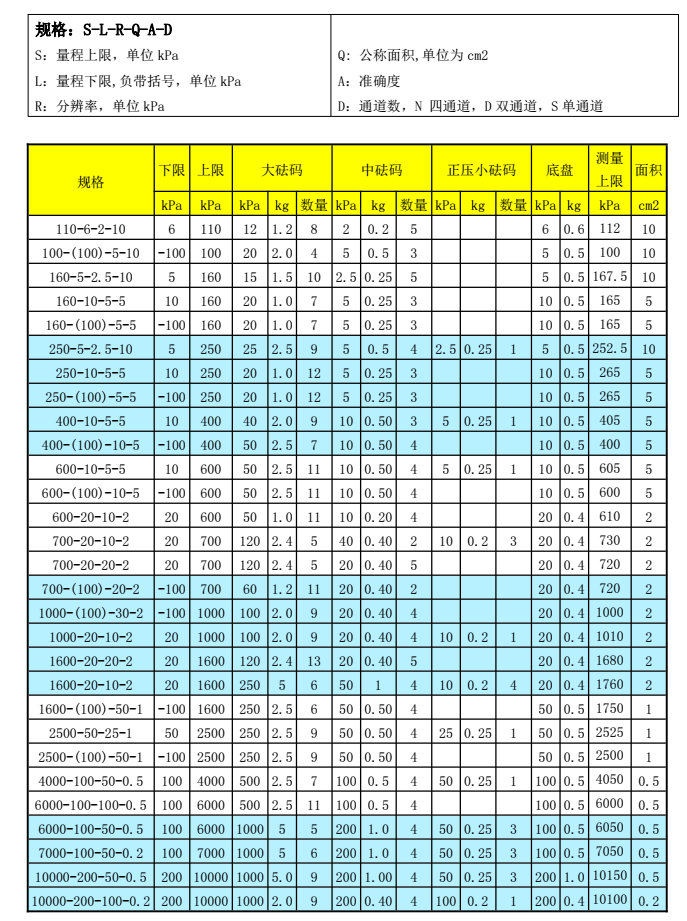
Note: Only the positive pressure fully automatic piston pressure gauge has small weights.